Part 1 of How the Land Got Its Shape.
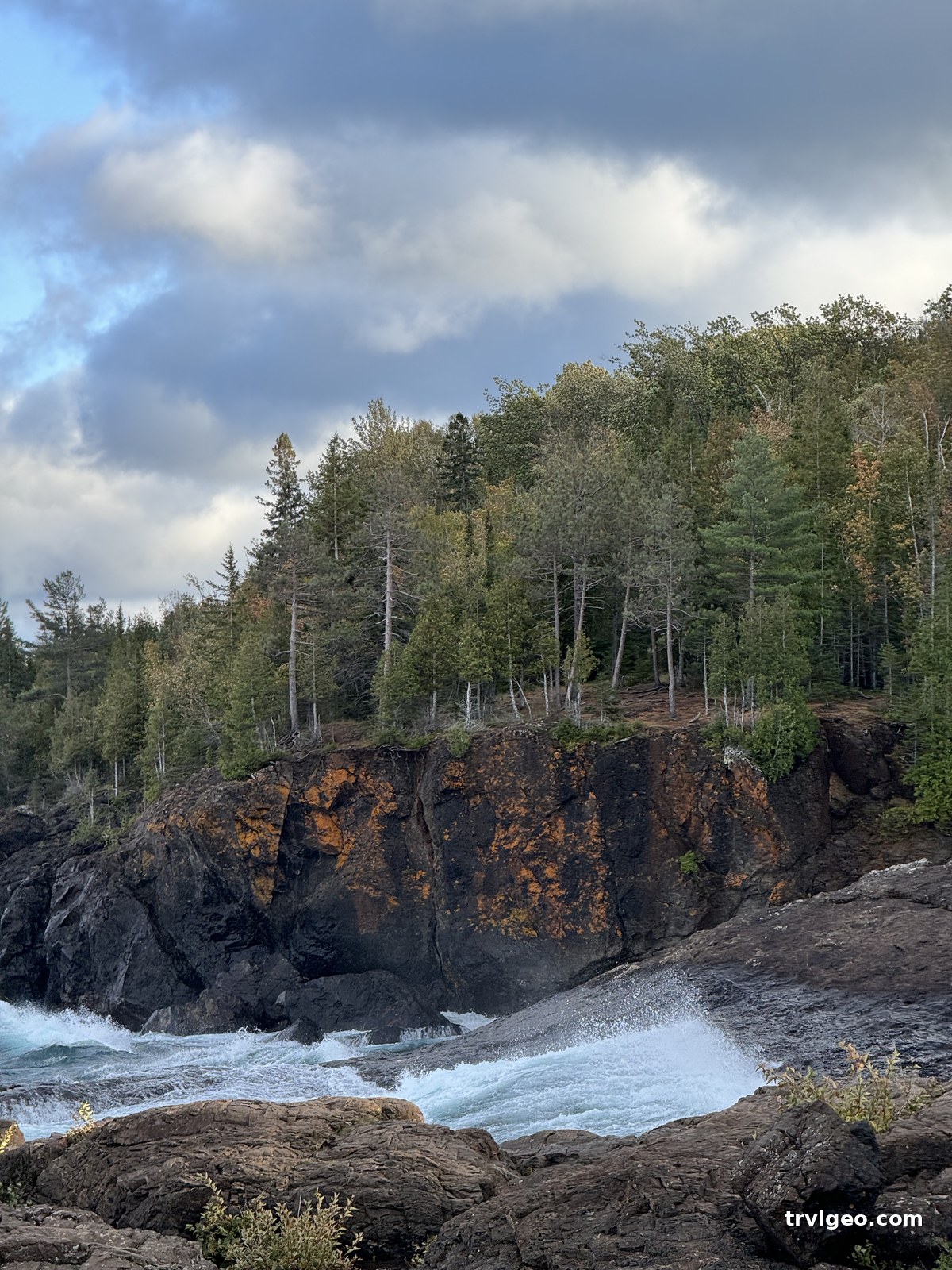
Stand on the pebble beach in October and the water does not look like a lake. It looks like the Atlantic on a grey day. The waves come in sets, the horizon is a straight line with nothing on it, and the wind has had 350 miles of open water to build up speed before it reaches you. That is the first thing Lake Superior gets wrong about being a lake, and it is not the last.
Superior is the largest freshwater lake on Earth by surface area: 31,700 square miles, about the size of South Carolina. It holds 2,900 cubic miles of water, more than all the other Great Lakes combined, plus three extra Lake Eries. Spread that water evenly over North and South America and the whole of the two continents would sit under a foot of water. About 10 percent of all the surface fresh water on the planet is in this one lake.
A lake that big stops behaving like a lake. In autumn, cold air slides over water that is still holding summer warmth, and the lake answers with its own weather: fog banks, sudden squalls, and the November gales that sailors on the Great Lakes still plan around. The most famous of those gales took the SS Edmund Fitzgerald on 10 November 1975, a 729-foot freighter that went down in a storm about 17 miles from Whitefish Point with all 29 of her crew. She is still down there, in more than 500 feet of water.
Why the wrecks stay down there
At least 350 wrecks are known to rest on the bottom of Lake Superior, and the real number is probably closer to 550, counting the ones sonar has not found yet. About 200 of them lie along an 80-mile stretch of Michigan shoreline between Munising and Whitefish Point, the coast sailors call the Shipwreck Coast.
What makes Superior different is what happens after a ship goes down. The deep water sits near 39 degrees Fahrenheit all year, cold enough that the bacteria which break down wood, flesh, and fabric barely work. There is almost no oxygen down there and almost nothing to eat, so a wreck can sit for a century looking like it sank last week. The same cold is behind the old line that Superior never gives up her dead: bodies do not bloat and float the way they do in warmer water, because the gas that would lift them is never produced in the first place.
None of this is a reason to go looking for the wrecks yourself. They are protected, and the water that preserves them is the same water that will end a dive fast. The place to meet them is on shore: the Great Lakes Shipwreck Museum at Whitefish Point, and the beaches at Marquette and the Porcupine Mountains, where the lake does its ocean impression in full view.

So what, if you never visit?
Superior is a reminder that size changes kind, not just degree. A pond has weather. A lake this size has a climate of its own, and the people who live around it plan their Novembers around it the way coastal people plan around hurricane season. The water in the lake stays there for about 191 years on average before it flows on, which means the lake you stand beside is, in a real sense, older than anyone standing beside it. It was here before the towns, before the ore boats, before the roads, and it will be here after them, still making weather out of nothing but wind and cold water.
Next week: the cliffs at Pictured Rocks look painted, red and ochre and teal, and in a sense they are. Just not by anyone. How Pictured Rocks Got Its Stripes is Part 2.
Have you stood on a shore that did not match the map in your head? Tell us where.
Keep exploring
Enjoy this? Get 10 maps that will change how you see the world, free.
Quick answers
How big is Lake Superior, really?
31,700 square miles of surface, about the size of South Carolina, holding 2,900 cubic miles of water. It is the largest freshwater lake on Earth by surface area and the third largest by volume, behind Baikal and Tanganyika.
Why does Lake Superior act like an ocean?
Size and depth. With 350 miles of open water for wind to cross, it builds ocean-scale waves and its own weather, including the November gales. Its deepest point is 1,333 feet down, and the deep water stays near 39 degrees Fahrenheit all year.
How many shipwrecks are in Lake Superior?
At least 350 are known, and the total is probably closer to 550, including wrecks that have not been found yet. The cold, low-oxygen water preserves them remarkably well. The most famous is the Edmund Fitzgerald, lost 10 November 1975 with all 29 crew.
Leave a Reply